Ownership · 7 min
Composite or timber fencing: which is right for your home?
Quick answer
Composite is usually chosen for lower routine upkeep and consistent colour, while timber offers natural variation and broad style flexibility. The better choice depends on the look you want, the structure beneath it, exposure, maintenance expectations and what each quotation actually includes.
ALFA FORMA homeowner guide · Updated 26 September 2026
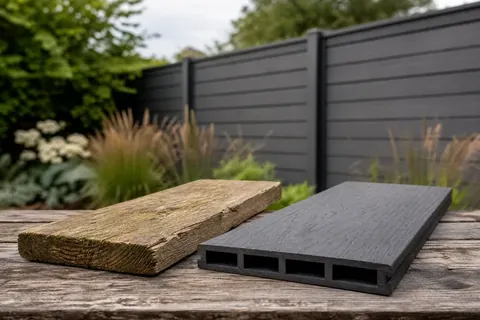
Appearance and character
Timber has natural grain and variation that many homeowners value. Composite gives a more uniform finish and works particularly well with powder-coated frames, modern gates and clean architectural lines.
Routine maintenance
Timber commonly needs cleaning and protective coatings renewed at intervals. Composite boards are selected to reduce painting and staining, although they still need occasional cleaning and the care recommended for the chosen system.
Posts, frames and foundations
Board material cannot compensate for weak posts, unsuitable foundations, poor drainage or failing masonry. Compare the supporting structure and installation method, not only the visible infill.
Movement and weather exposure
All outdoor materials respond to sun, moisture, temperature and wind. Correct gaps, fixings and spans matter, especially on exposed boundaries or long uninterrupted runs.
Repairs and future changes
Ask how individual boards or panels can be removed, replaced or matched later. Timber may be easier to modify locally, while proprietary composite colours and profiles can change over time.
Compare complete quotations
Check removal, waste, posts, frames, fixings, gates, finishing and making good. A lower headline figure may not represent the same structural specification or finished scope.
Continue planning your project
This guide is general homeowner information, not legal or site-specific safety advice. We will confirm the important planning, structural and powered-gate details for your property before work begins.