Design check · 6 min
Could a cantilever gate work on your drive? Five simple things to check
Quick answer
A cantilever gate keeps the driveway opening free of a ground track, but it needs enough clear side space for the gate leaf and its counterbalance. A rough opening width, frontage photographs and a view of the run-back area are enough for a useful first conversation.
ALFA FORMA homeowner guide · Updated 26 September 2026
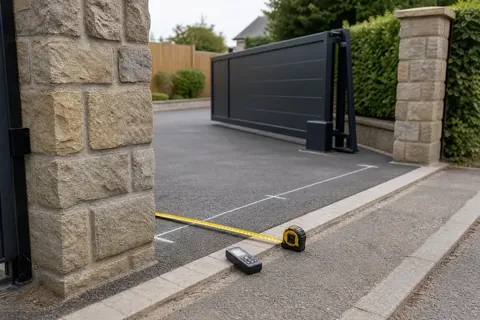
1. Measure the clear vehicle opening
Measure the gap your vehicles actually need to use, rather than the full distance between distant boundary points. Note the narrowest usable point and include gate posts, brick piers, wall returns and anything that projects into the opening.
2. Check the run-back beside the opening
A cantilever leaf is longer than the clear opening because it includes a counterbalance section. The exact allowance depends on the gate design, weight and supporting hardware, so photograph the full side area rather than assuming the opening width alone is enough.
3. Record slope, levels and drainage
Show the driveway from both sides and note obvious falls, channels, drains and changes of level. A cantilever system avoids a track across the entrance, but its foundations, support points and gate travel still need careful setting out.
4. Mark services and possible power routes
Identify inspection covers, visible service routes and where power could come from if automation is being considered. A site survey is still required before foundations, ducts, controls or safety devices are specified.
5. Plan the complete frontage
Consider the pedestrian route, visibility when leaving the drive, bin access, existing brickwork and any matching boundary panels. Planning the whole entrance together usually produces a safer, more balanced and better-looking result.
Continue planning your project
This guide is general homeowner information, not legal or site-specific safety advice. We will confirm the important planning, structural and powered-gate details for your property before work begins.